How to open a bank account in Denmark
What a Danish bank asks for, your legal right to a basic payment account, the 10-working-day deadline and what to do if the bank says no.
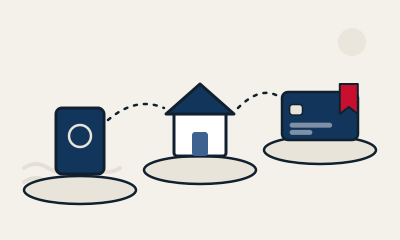
What you need
- Identity
- Passport, driving licence or health insurance card
- Purpose
- Employment contract or invitation letter
- Numbers
- CPR number, or your date of birth if you have none
Who has the right to an account
Danish law does not leave the decision entirely to the bank. The act on payment accounts (lov om betalingskonti og basale erhvervskonti, LBK nr. 1462 of 18 November 2025) says a bank must offer a consumer a basic payment account in Danish kroner. The right covers consumers with legal residence in a country of the European Union or the EEA, and people without a residence permit who cannot be deported. The EU directive behind the act, 2014/92/EU, adds that the right applies irrespective of where in the Union the consumer lives.
A basic payment account is an ordinary working account. It must let you deposit money, withdraw cash at the counter and from ATMs, pay by card including online, receive and send transfers and set up direct debits. The bank must offer these services free of charge or for a reasonable fee. The law sets no amount in kroner for what counts as reasonable. The Danish detail is on our page about the basic payment account rules.
Since 1 January 2026 a further rule applies: a bank may not treat consumers with legal residence in the EU differently because of their nationality or place of residence when they apply for, or use, a payment account.
Which documents a Danish bank asks for
Lifeindenmark, the public portal for newcomers, lists the documents most banks ask for: proof of identity, for example a passport, driving licence or health insurance card; an employment contract or an invitation letter; a tax card, which it marks as not obligatory; and, for US citizens only, a social security card. It adds that documentation requirements may vary depending on the bank.
The reason for the questions is the money-laundering act. Hvidvaskloven § 11 requires a bank to record a personal customer's name and CPR number and to check identity against a reliable, independent source, such as an electronic ID. The bank must keep a copy of the documents for at least 5 years after the customer relationship ends. If it cannot complete these checks, the law says it must not open the relationship.
Do you need a tax card?
Ask your bank: requirements vary, and lifeindenmark lists the tax card both as required and as optional. The lifeindenmark page for new arrivals says you can only open an account with a Danish bank once you have your tax card, and that banks will ask for your passport, tax card, contract of employment and payslip. The lifeindenmark NemKonto page, updated 12 June 2026, lists the tax card as not obligatory. Neither text is wrong about what some banks do. Bring it to the meeting if you already have it.
Opening an account without a CPR number
A CPR number makes everything easier, and many banks ask for one. The law still allows a bank to identify you without it: hvidvaskloven § 11 says that if a customer has no CPR number, the identity data must include the date of birth instead. Whether a particular bank opens accounts on that basis is its own decision, within the rules on basic payment accounts.
Online banking is the next hurdle. MitID normally needs a Danish CPR number, but lifeindenmark explains that a person without one uses an 8-digit P code in the MitID app, together with a valid passport or an ID card with a chip. If you expect to stay, registering for a CPR number first is usually the shorter route. Our page on registering for a CPR number explains who can register and where.
A worked example: counting the bank's deadline
The 10-working-day limit runs from the day the bank receives a complete application. Missing documents stop the clock, because the application is not complete until they arrive. The table under this text counts the limit for an application completed on Monday 2 November 2026, assuming no public holidays fall in the period.
The law says "as soon as possible and at the latest" 10 working days, so a quicker answer is normal. Finanstilsynet has called the deadline absolute.
If the bank says no
The act lists the grounds for refusing a basic payment account. A bank may refuse if you cannot show a genuine interest in the account, if you already hold a Danish payment account with the same services (unless you have been told it will close), if you have committed crimes against the bank, or if you have behaved offensively towards staff or customers. A breach of the money-laundering rules is also a ground. Finanstilsynet has told banks that this list is exhaustive and that a missing fixed address is not a valid reason.
A refusal must be given free of charge, on paper or another durable medium, with the reason. It must also tell you that you can complain to Det finansielle ankenævn and contact Finanstilsynet. How to take a case to the complaints board is on our Danish page about complaining about a bank.
After the account is open
Three things are worth doing in the first week. First, read the fee information document the bank must give you when you sign, so you know what cards, transfers and cash withdrawals cost. Second, find your registration number, account number and IBAN, which you will need for your salary and for transfers from abroad; our page on reading a Danish account number shows where they come from. Third, make the account your NemKonto so public payments reach you. You can ask the bank to report it, or do it yourself; see the Danish NemKonto rules or our English summary of NemKonto for newcomers.
Pitfalls to avoid
- Arriving without the papers. An incomplete application does not start the 10-day clock.
- Accepting extra products as a condition. A basic payment account may not be tied to buying other services, apart from shares that every customer of that bank must hold.
- Letting the account go quiet. A bank may close a basic payment account after more than 24 months in a row without transactions, with at least 2 months' notice.
- Using a private account for business. Business use is one of the listed grounds for closing a basic payment account.
- Forgetting to compare. Finans Danmark finances Basalbetalingskonto.dk, which shows each bank's price for opening a basic payment account and its yearly costs.
For the wider picture of CPR, MitID and the krone, go back to our newcomer's guide to Danish banking. The Danish overview of account types lists the other accounts a bank may offer.
Basic payment account: counting the 10 working days
| Day | Date | What happens |
|---|---|---|
| Day 0 | Mon 2 Nov 2026 | The bank has every document it asked for |
| Working days 1 to 5 | 3 to 9 Nov 2026 | The bank checks identity and money-laundering risk |
| Working days 6 to 9 | 10 to 13 Nov 2026 | A decision can come at any time |
| Working day 10 | Mon 16 Nov 2026 | Last day to open the account or give a written refusal |
Step by step
- Register for a CPR number if you can It is not required by law for every bank, but many banks ask for it and MitID needs it.
- Ask the bank what it needs Requirements vary by bank. Ask about the tax card and an employment contract.
- Hand in a complete application Bring a valid passport or ID card with a chip and the documents the bank listed.
- Wait at most 10 working days For a basic payment account the bank must open it or refuse in writing within that limit.
- Set up NemKonto and MitID Choose the new account as your NemKonto and activate online banking.
Questions
Can a foreigner open a bank account in Denmark?
Yes. A bank must offer a basic payment account in Danish kroner to consumers with legal residence in an EU or EEA country, whatever their nationality. Since 1 January 2026 the bank may not treat applicants differently because of nationality or place of residence. Other account types are the bank's own choice.
How long does it take to open an account?
For a basic payment account the bank must open it or refuse as soon as possible and at the latest 10 working days after it receives a complete application. Other accounts have no statutory deadline. Missing documents delay the start of the clock.
Do I need a Danish address?
For the CPR number, yes: lifeindenmark says a permanent address in Denmark is mandatory. For a basic payment account, Finanstilsynet has told banks that a missing fixed address is not a valid ground for refusal. The bank will still need to verify your identity.
Is a tax card required?
Ask your bank. The lifeindenmark arrival page says a Danish bank account can only be opened once you have your tax card. The lifeindenmark NemKonto page lists the tax card as not obligatory. Bring the tax card if you have it.
What can I do if my application is refused?
Ask for the written reasons, which the bank must give free of charge. You can then complain to Det finansielle ankenævn, after first complaining to the bank, and you can contact Finanstilsynet, which supervises the act on payment accounts. The refusal letter must mention both options.
Can I keep using the account I already have abroad?
You can, and you can even use a foreign account as your NemKonto for public payments. A Danish account is often more practical for salary, Danish direct debits and transfers in kroner, but no rule forces you to open one.
Sources Lifeindenmark: NemKonto, your public bank account (documents banks ask for)Lifeindenmark: When you arriveLifeindenmark: MitIDAct on payment accounts (LBK nr. 1462 of 18 November 2025), §§ 9, 11-13LOV nr. 1638 of 16 December 2025, § 9 (new § 8 a)Hvidvaskloven (LBK nr. 433 of 17 April 2026), §§ 11, 14 and 30Finanstilsynet: consumers' right to a basic payment accountDirective 2014/92/EU (Payment Accounts Directive), art. 16Finans Danmark: compare banks' priceslifeindenmark.borger.dkborger.dk — checked 21 October 2026